A Great Life | Acts 20:17-31
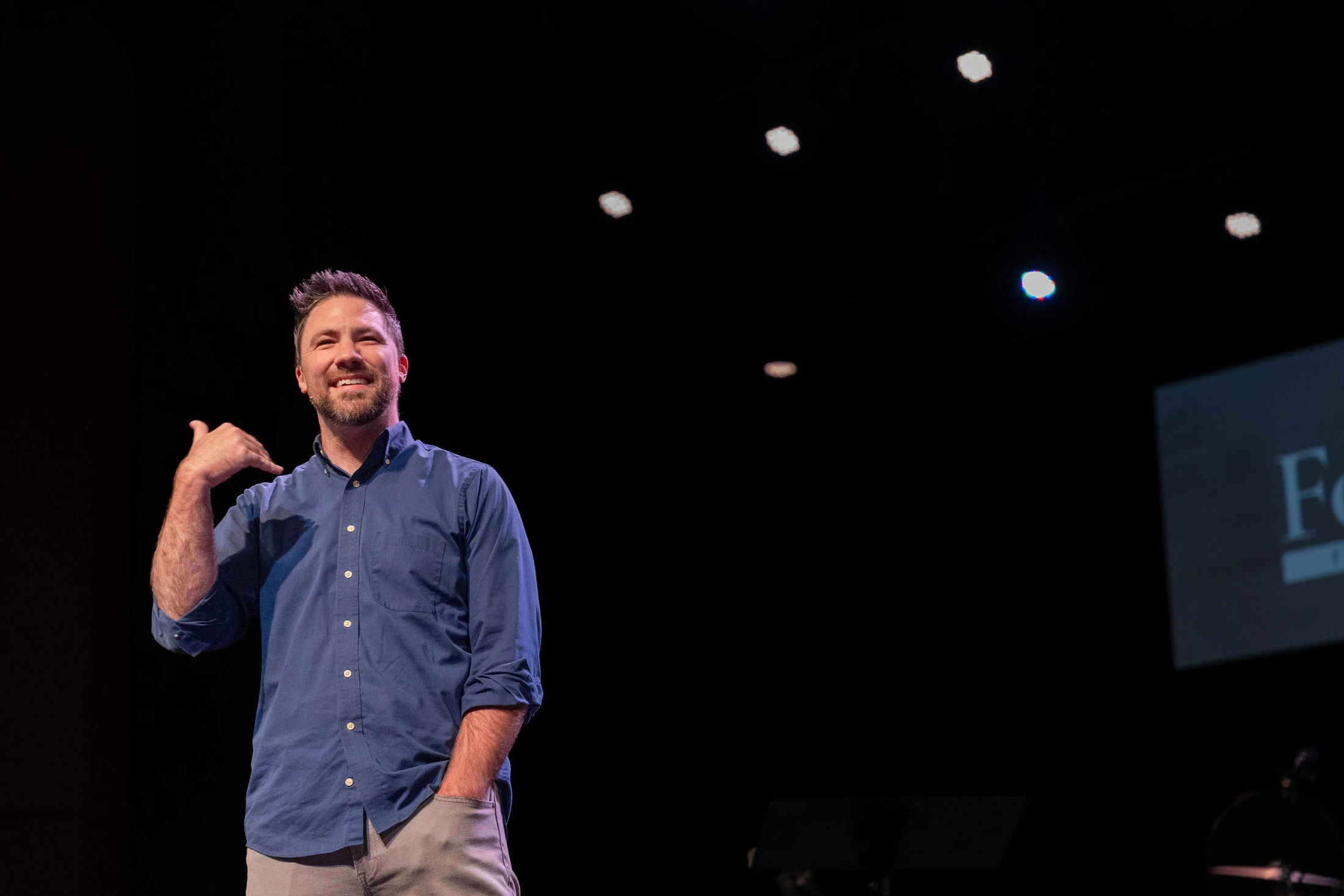
What if you knew, without question, that your life mattered — not because of what you achieved, but because of what you gave away? In Acts 20, the apostle Paul stands before the elders of Ephesus knowing he'll never see them again, and instead of fear or regret, he says one thing: none of it compares to finishing the race God gave him to run.
Pastor Joel Hastings walks through Paul's farewell speech, showing how a faithful life — not a perfect one — becomes the loudest sermon we'll ever preach. From refusing to shrink back from hard truths, to holding onto the "whole counsel of God," to living a life poured out for others, this message challenges us to ask what we're actually willing to suffer for, and whether Jesus is truly worth everything we have.
Here's a couple key takeaways
• Let your daily life — not just your words — be the testimony that points people to Jesus.
• Don't shrink back from the hard parts of Scripture; the whole truth is what protects and matures the church.
• Measure your life by what you give away, not by what you accumulate.
My name is Joel. I'm one of the pastors here, and it's so good to have you guys. We're going to be in acts chapter 20 today. Acts chapter 20. If you have your Bibles, you can go ahead and make your way over there. And as you are doing that, I am very excited because last, as of yesterday, I think, or as of this weekend, college football started back up again.
Amen. Amen. And and in high school football and starting. And so I like to refer to this time as the best time of year. Amen. And now I realize, like whenever I bring up sports here, half of the people in this congregation are like, yes. Finally, something interesting to talk about. And then the other half of you are like, listen, I had to watch my husband watch TV all day yesterday and I could care less.
Could we not talk? But like, listen, it was like the start of it. This weekend was the start of the sports. And so for a lot of different sports and, and so like give me this one, I'll try to hold off another illustration until the playoffs or something. All right if you give me this one. But listen whenever you start a season off, whether that is through the football season or like my boys just started soccer and and we're all doing different baseball events and all sorts of different things that are in the middle of it right now, going at full force at the moment here, every single one of us, whenever we start a
season like that or we start rooting for our one of our favorite teams, whatever team that might be, your root and form, we're all wanting the same thing. We all want to win the championship right now. Some of you are going to say, I just want to have fun. Well, you will never win a championship with that attitude, all right?
But like for the rest of us now, the winners in the group like we want to win the championship, right? And that's like the the overarching goal. And to get to that point, whether it is in Little League baseball or a national championship or the Super Bowl, like it will take some level of dedication. And the higher up you get, the more dedication that it will take.
By and large, the vast majority of us, let's be honest, just simply do not have what it takes to ever even reach that dedication to to win a championship, to actually do something great in the the field of athletics. That is just not something that the vast majority of will ever get to experience, myself included. But yet there's this idea that you want to chase after championship.
You want to be part of a team. You want to root for the team that wins the championship. And that's a great thing. But then there's probably one thing that I can think of even better than that. Even higher the upper echelon, the the place where legends are born. And that's not only if you win a championship, but you're part of what's called a dynasty.
All right? Now, a dynasty usually means like that. You have won 3 or 4 championships either in a row or very close together here. And it's this idea that if you're a part of a team that's a dynasty, then you are not only the greatest for that year, but you are greatest for a long time. And so you think of great dynasties like the Chicago Bulls back in the day, or maybe the New England Patriots.
And some of you really want me to say the Chiefs, but I'm not going to do it. No, I'm not going to do it. But my Cowboys back in the 90s. No, I'm just kidding. That's how far I have to go back. No. It's like we think of this. And whenever I start to think of these type of great teams, there's always going to also be like one person on that team that was really like the the guy or the girl that just drives that team.
It's almost like an obsessive maniac that just drives off. Like if you ever watch a little bit about like how Jordan interacted or how dumb Brady his mindset was, or another one is like Kobe Bryant. I remember watching one of the documentaries back in the day that said he would wake up often at 4 a.m. to go and work out.
In fact, there was one time whenever he was training for the Olympics, another trainer said, hey, I want to work out with you. And so he said, all right, be there at 4 a.m.. And so the guy wanted to impress Kobe. He shows up at 330 in the morning, 330 in the morning. That is closer to my bedtime than my wake up time.
He gets there at 330, and Kobe is already sweaty and has already been practicing starting at 3:00 in the morning. His mindset was, if I get up at 3 a.m., I can fit for practices in a day, whereas the only most NBA players practice twice a day. But Kobe practice four times a day. And he said, after ten years, I'm going to be so much better than my competition.
That's crazy, right? Like, that's that is maniacal that that's the type of mindset that the overwhelming majority of us will never fully understand. But that's what it took for greatness to happen in the sports field or basketball court or whatever it is like. It takes somebody with that mindset. And the reason why I bring all of this up is because as I was sitting there watching some sports this weekend, you can tell.
And then also, as I am reading through acts chapter 20, this passage that we're going to be looking at, we're going to see Paul give a speech, give a speech to some of the other leaders in the city of Ephesus. And Athey is giving this speech. It's like, man, this is a guy that was completely obsessed with this mission.
He was completely dedicated to this one core idea, which is the spreading of the gospel of Jesus Christ. He was so passionate about this that nothing else mattered to him. And here's the beautiful part of the gospel that we get to preach about is that eventually, if you go and you were to talk to Tom Brady or Kobe or Jordan or any of those guys here, eventually at some point, what are they going to have to say?
They're going to say, yes, I reached the pinnacle of all success and it's still left me empty. The beautiful part of the gospel is for Paul. He's saying, I gave my life for the gospel and it was worth it. It was worth every ounce that I gave to it. And that's the only thing in this world that can ultimately, we can ultimately say that is true, that everything that you give, all that I can give to the gospel, it's going to be worth it in the end.
And we get to see his passion for this, and it should be our passion as well. And so we're going to be in acts chapter 20 starting in verse 17 here. And it says from now, from my laetus, he sent to Ephesus and called the elders of the church to come to him. And let me stop here for just a moment.
I skipped ahead from a few verses from last week, because I really wanted to focus in on just the idea of how the church in Ephesus started, because eventually, in October, we're going to be starting a series through the book of Ephesians. And this is really just a background material for that series that we're going to be doing here.
And so, so skipping ahead to verse 17, we see that Paul in the last few verses, here's what's happened. Paul, after last week when there was a big riot and commotion, he ends up leaving because essentially the church has been established. Well. So he goes back and he knows he wants to go to Jerusalem. But a Jerusalem was under severe persecution at that time, so much so that many of them were starving in the church.
And so he actually goes around and tries to collect a love offering from all the other churches in the area. And so Paul is going to end up leaving the city of Ephesus. He's going to go up through northern Turkey and Greece and all of these other cities try to collect an offering. And then now he is heading back towards Jerusalem.
But while he's on his way back towards Jerusalem, it says then that he's going to stop in Miletus, which was a port city. So Ephesians, the Ephesus is up a few miles inland. Miletus is just right on the port. And he's going to stop there. And then he calls the elders to come to him. In the previous verses he says, I can't go into the city of Ephesus because I don't want to spend that much time there and see Paul at this point in his life.
Already started to become like a professional church person, and Paul knew that if he were to go inside the city of Ephesus, he ain't getting out anytime soon. In the same way, like for for us as well. Like this still happens as an adult. But I especially remember as a kid, like, do you remember as a kid whenever, like you were leaving church and it took like an hour to leave church and then you get out to the car and then your mom's like, I forgot my Bible.
I gotta go back in. It's like you're not eating lunch that day, right? Like like you don't just walk inside a church building and leave again like you are in there for an hour and a half. And so, Paul, like understanding, like, if I go into the city of Ephesus, I'm not getting out anytime soon. So instead he calls the elders.
The elders is another term just for the leader of the church. So you're going to see elders, overseers, like it's just talking about the leaders of the church. He calls them out to himself. And when they came, he said to them, and now he's going to give a speech, a unique speech, because it's one of the few that's actually given over to Christians and Christian leaders.
And so here's Paul's message to them. He starts out by saying, you yourselves know. You yourselves know how I lived among you the whole time, from the first day I set foot in Asia, serving the Lord with humility and with tears, with trials that happened to me throughout the plots of the Jews. What's interesting to me is Paul, the great champion of the gospel, the guy who taught and wrote most of the New Testament.
He doesn't immediately go and say, remember what I taught you? Wasn't the first thing he said. He didn't go back and start teaching theology immediately. He is going to get to all of that. But the very first thing he says is, I want you to remember how I lived, how I lived, and that's a good reminder for us.
See, because his opening illustration, his testimony was verification that what he was about ready to say is true because he's like, you guys remember, you remember all the hardships that I went through. You remember all the tough things that had gone through. You remember how I lived even with tears, how I preached to you guys. You remember that?
And it's a good reminder for us as well. See, because the greatest sermon that you'll ever preach is a faithful life. The greatest sermon that I could ever preach is just living a faithful life. That was true for him. That's true as well for you, because some of us are going to say, you know what, Joel? I can never get up there and preach a sermon.
Well, you are preaching sermon every single day that you wake up and you go to work. You're preaching a sermon when you're at school, you're preaching a sermon. And what does that sermon actually say? A faithful life is going to point people back to Jesus. And that is the greatest message that any one of us could ever preach.
Because in the end of the day, before anyone receives your message, they will watch your life. They're going to watch it. Now, this isn't to say that God can't use you just walking up to a stranger and share the gospel, and they get saved immediately. Yes, that can happen, but overall, people want to know. People want to see.
And here's the here's the crazy part about it. Like in the last verse here, Paul did not get up and say, hey guys, you have seen my life and how good it's gone. You know, y'all seen my private jet, y'all seen how rich I am. Y'all seen the Instagram post? Y'all see that, right? No. What was his response?
He's like, you all seen the tears that I cried, the people that tried to kill me, the suffering that I have gone through. You saw all of that. And you saw that God was still good in the midst of it all. And that was his testimony. And that can be your testimony, because so many of us, we've walked through things and we're saying, what can God use out of this?
He can use it whenever you turn around and say to the people around you, did you see what I just walked through? God is my only hope. Jesus is the thing that I cling to, and when we have that mindset, we now have the mindset of Paul and it changes everything else about you. And now when your kids see that, like so many people, so many kids walk away from the church.
And this isn't the only reason, but man, it sometimes is where they say, you know what, my parents took me to church every single Sunday, but that's not how they acted on Monday. And now they start to see a disconnect. But the more that your life aligned to the message that you actually say that you believe, you will start to see God work and move just like Paul did.
It goes on to say in verse 20, now how I did not shrink. This is the one of the ways that he lived, how I did not shrink from declaring to you anything that was profitable and teaching you in public, and from house to house, testifying both to Jews and Greeks of repentance towards God and to faith in our Lord Jesus Christ.
So it's one of the ways that I did not mess up the gospel was I did not shrink from declaring to you that word for shrink literally means to be, to hide away. He's like, I did not hide any part of the things that you needed to know. Everything that you needed to know that would be helpful for you.
I told you whether you liked it or whether you did it, because at the end of the day, both the Jews and the Greeks, who were completely opposite in every single way, would want the pastor to say something completely different. For both of those groups. He's like, I don't care who I was talking to, I was preaching the gospel to them.
I was sharing that message of Jesus with them. You know, it's sometimes it's hard as a pastor to to preach on certain things, like, like it really is like I feel that pressure, but it's probably not in the way that that you think it might be. It's always funny to me, though, because we all like at the end of the day, for instance, oftentimes whenever I preach a sermon and the overall the tone of the sermon is encouraging, like, hey, you can do this.
God's going to get you through this hardship, like you're going to have victory over that. There's lots of passages that that lend itself well to that type of sermon, and you're just preaching it faithfully. There's going to be all sorts of those messages. And so oftentimes whenever I preach an encouraging message about that, like just an overall encouraging, uplifting message of very frequently, almost every single sermon after I get out and I'm out there in the gallery, somebody will come up to me and be like, pastor, thank you so much.
I needed that sermon today. It was it was to me, Lord, like, thank you so much for just preaching such an encouraging word today. But then whenever I preach a sermon that's a little bit harder and tone about, you need to be convicted of your sins. You need to repent from your sins. There's some things in your life that you might need to correct.
And I go out to that gallery and and I'm standing there. People still come up to me, but they don't say that. You know what they say. After a really hard sermon, they say, man, I wish my husband was here today.
Somehow when we preach about sin.
It's a little bit harder when it's our sin, right? If I can just be honest, I think probably we lose people when I say things like this, but I can't drink back based on this.
Like, here's the deal. Everybody loves it when their pastor talks about sin. They do. That might surprise you. But like literally, I don't know of one single person that's like, man, I don't want my pastor. Everybody really, really loves it when their pastor talks about saying, whether you're politically liberal or politically conservative or wherever you find like you actually probably are going to love it when pastor talks about sin, as long as it's not your sin.
The moment that the moment that I figure out like what it is that we need to talk about and we go deep there, then all of a sudden it's like, hey, hey, hey, back off, back off there. What type of agenda do you have? See, Paul, though, he understood that, he understood that they were both Jews and Greeks who wanted vastly different things from him.
And he's saying, you know what? I didn't shrink back. I didn't take a step back. I declared it publicly to you and to for anyone to hear. I went inside your houses, and I told you in the houses the things that you still needed to hear. And what was the thing that they needed to hear? Repentance towards God and the faith in our Lord Jesus Christ.
That you need to turn from your ways and follow Jesus for every single one of us. He didn't shrink back. And now, behold, in the next verse I am going to Jerusalem, constrained by the spirit, not knowing what will happen to me there. Except the Holy Spirit testifies to me in every city that imprisonment and afflictions await me.
It says, and now the Holy Spirit is constraining me. It isn't. We often talk about being led by the Holy Spirit. And that's a wonderful thing, is thing that you should pray for, that the Holy Spirit would lead you. But notice here he's basically saying, I'm being led by the Holy Spirit, and I don't know what will happen to me there.
That, you know, what that means is like, I don't know if I'm going to live or if I'm going to die, like, that's what that means. So he's like, I'm being led by the Holy Spirit, literally constrained by the Holy Spirit, but I'm being led by the Holy Spirit in such a way that I don't know if I'm going to live or die.
All I know is once I get there, I will be imprisoned and afflictions await me. Now. I have prayed through many decisions in my life. Maybe you have as well. You're like God, please show me the way. Show me which direction. Lord, what is your will for my life? And if I was to pray through something like if I was praying through like a move coming to our because I always something like that, where it's like I was praying through that.
And as I was praying through that, the Lord revealed to me, if I go, imprisonment and afflictions await me, I would say, Lord, thank you for closing that door. I'm going this way, right? That's how. That's how most of us probably would respond. Interestingly enough, though, for Paul, he's not saying the Lord is leading me. The Lord is constraining me, that he is holding him back saying I can't go any other way.
And so for Paul, it was more like, I know that imprisonment and afflictions await me. And that's why I know it's the Lord's will in my life. There's this idea of constraining, I'm telling you, like I have a two year old little daughter and almost two next month, and she is just the cutest little girl and she will just follow me around, like, everywhere, whether I wanted to or not.
She's just going to follow me around. You often see her even after church. There's a good chance that she'll be following either me or my wife around. She's like eating a snack, probably just like humming a little song in her head. Like just adorable. She just following mom and dad around perfectly. We don't have to ask her if she just doesn't.
Right up until we say, all right, Madison, let's get in your car seat. And then in that moment, she bolts and and as we pick her up, she's literally hanging on to the side of the door. We're like trying to. We're trying to put her arms in, like. Like if it's. It might sound like it's not to be like I'm loving her by trying to protect her.
And. And yet that's how so many of us follow the spirit, isn't it, when things are going well, Lord, lead me on. Lord, lead me to green pastures. The moment that he says, hey, there's going to be some hardships ahead. Lord, please know. And yet that's the very thing that God is going to do in our life. And we see his heart come out in verse 24 when he says, but I do not account my life of any value.
Nor is precious to myself. Depending on what version you're going to read. This is going to sound drastically different in some of the different versions, because the Greek isn't very clear. Essentially what he's going to be saying here in the last verse he says the Holy Spirit is testifying, or the Holy Spirit is like saying words to me in these words are you are going to suffer.
But then in verse 24, when he comes back, he comes back and he says, but I don't account those words of much, not meaning that he doesn't care what the Holy Spirit is saying. He's saying even though the words that the Holy Spirit is saying is hard, I'm still going forward to what the Holy Spirit is calling me to do.
So I don't account my life of any value, nor is precious to myself, his own life. He didn't even count that way. If only I may finish my course in the ministry that I receive from the Lord Jesus to testify to the gospel of the grace of God. There's only one thing matters to me to finish my course.
Let's runners language. By the way, in that time period, running was probably the most competitive sport that you could actually do. And so he often used sporting language. And here's here it is right now he says only one thing matters not to win. Even at this moment. He's just just to finish to finish the race that God has called me to run.
I just want to do the thing that God has called me to do in the ministry that I received. Listen, I have a different course and a different ministry as a pastor here at Grace point than you might have, but you also have a course in a ministry. You also have a race that God has set before you.
Your children needs you. Your coworkers need you, your school mates need you, that God has put you in a position. And your goal in this life is saying, God has put me in this lane and I am going to run and run to the point where I disregard my own well-being so that I can run the race to the Lord.
And this is the greatest motivation. The greatest motivation is a God given mission. That's God given mission. Because at the end of the day, what you know, when you know what you're living for, you know what's worth suffering for. Listen, it's the most important thing in your life is money. Then you're going to stay late at the office every night, aren't you?
Like you're going to sacrifice family activities in order to to get more money. You're going to suffer so that you get more money. If the most important thing is to look good, you're going to go to the gym every day and you're going to suffer in that gym. And that's not a bad thing in itself. But like, it's going to reveal to yourself what is the most important thing when you are willing to suffer for that thing.
For some of us, though, some of us like we don't want people to know that we're a Christian, right? Some of us like, we're like, I can't share my faith at work. Why? Because I'm up for a promotion, and I don't want to make it weird between me and my boss. And you're not willing to suffer for it?
Are you really willing to live for it? Because for Paul, he's like, I don't consider my life of any value, nor is precious to myself. The only thing that matters is to testify, to do the things that God had called me to do. What are the things that God is calling you to do? What is that race that you are called to be on?
Verse 25 goes on to say, and now, behold, I know that none of you among whom I have gone about proclaiming the kingdom will see my face again. And actually, grammatically, this verse right in the middle here is really the whole point of this entire talk. The whole point is just to say, hey, I came here to visit just to say that you will probably never see me again.
I'm probably going to die.
Listen.
There's even in the midst of that you saying you will never see me again. But it's still worth it. It's still worth it that you might not know me or see me again. But the medicine that I'm on and the message that I'm caring is still worth it. Even then. You know, it's hard to say goodbye sometimes. I know that this is a touchy subject, because a lot of you probably just said goodbye to some college students in the last week or two, and because they went off to college and like a few of you are very sad about that, and I'm sorry about that.
Some of you seem oddly happy about that. And I'm a little bit, a little bit concerned about that as well. As I get it, though, my I was the youngest of four. All of us went to college about 20 hours away from where we lived. And whenever, as my oldest sisters turned to go to college, the first one of the family, like I remember like the whole entire, you know, family loaded up in the minivan with the U-Haul behind, packed to the brim.
There. We take her out, we unloaded. We get her all set up in her dorm room. I just remember this is like a core memory as eight year old Joel. Like, I was walking out already crying because I was going to say goodbye to my sister. Like, I didn't even like her that much, but like, I was crying and.
And like, we all get in the car after saying goodbye, we're driving away. She now it's like literally it starts to rain. It was a sad movie, just like playing out. It starts to rain. She's waving in the rain as we're driving 20 hours away. That was back in the day when, like, you know, long distance phone calls still cost seven minutes or $0.07 per minute like it was.
It was a different time where it was like, I am never going to see her again. Like in my mom's in the backseat. I'm crying and everybody's crying. And then she was the oldest. By the time I went to school, I was the youngest. Like, I don't know where my siblings were. They did not care. And and we pulled up to the like, we get to college.
And my parents were like, all right, see you later. I think we'll see you at Christmas. Right? You know. I got issues. I'll go to therapy one day.
When you care for somebody, when you deeply care for somebody, this is going to mean something when they say you're never going to see me again. But. But why does it mean something for them? It's because they saw the way that Paul lived. They saw the way that Paul loved. They didn't just hear a sermon on Sundays. They actually lived with this man and saw his heart.
And in the same way, for the people around us, they should know your heart so much that it just comes out of you. It explodes out of you that says they love me. They have no reason to love me. They have no reason to be this kind to me. And yet they do. And this is the heart that this would have been devastating for them to hear this word.
In verse 26 it says, therefore I testify to you this day that I am innocent of the blood of all. For I did not shrink back from declaring to you the whole counsel of God.
He says, you're never going to see me again. But by the way, I'm innocent of the blood of all, which is a little bit of an ominous take. Why does he say that? He's innocent. He's innocent? Why? Because he did not shrink. He did not hide back from declaiming the whole counsel of God. Notice that whole counsel of God, not just part of the council of God.
The council of God is speaking about Scripture, by the way. He's like, I preach the gospel. I preached all of the words in here. I did not hold anything back. Everything that you needed to know, whether it made me popular or it didn't, I preached it all. And the greatest message of this greatest Christian was this not his words, but the whole word of God, a word of God.
Let me let me illustrate it a little bit this way. Here. I'm not leaving. I just got a prop over here and talk amongst yourselves for just a moment. All right, there we go. I'm back. So let me illustrate it this way. Let's just say for a second that that this fence that I built and it might hold up, hopefully, that this fence is actually going to be an illustration of the Bible.
All right. So this fence, every single picket is going to be an important principle that the Bible teaches here. So maybe it's talking a little bit about our identity in Christ. Maybe we're going to talk a little bit about finances. We're going to talk a little bit about sexuality. Maybe we're going to talk a little bit about just all sorts of things in the New Testament, salvation and all of that, like every single aspect of this is going to be an important part of Scripture.
And here's what the Bible does. Here's what this does. Essentially, now, whenever we build it, whenever we talk about all of Scripture in church and we don't skip over anythings, it allows the church to be protected. Right? Like the better that we talk about things, the more that we talk about things. It now is going to create this covering for us that we know that we are protected.
Why? Because no matter what is said outside of this area. We're behind it. We know what Scripture says, that there isn't going to be anything, that somebody comes and somebody's twisting words and and try to convince us to go away. Why? Because we're protected. But here's what happens whenever we say as a church, you know what? I don't want to talk about that thing.
Now. What's happened? We left our self vulnerable to all sorts of attacks of Satan. Why? And so for some of us, we say, yeah, I'm never going to cheat on my wife. Like, yeah, I know I need to read my Bible, but I'm not going to follow God with my finances or yeah, you know what? I really love the community aspect of church, but I'm still living with my girlfriend, I don't care.
And now we have left ourselves vulnerable to attacks because we didn't take the whole counsel of God. We just took half of it. And what good is offense if you only have half of it? And every truth that we ignore becomes ground that we leave unguarded? And how good is offense if we only listen to half of it, or we only build half of it?
That wolf, that attacking thing can come right around it, which is what we see in the next verses here. He says, pay careful attention to yourselves and to the flock in which the Holy Spirit has made you overseers. That's a Greek word for bishop. It's a leader of the church. So for them, they were actually literally the overseers, the pastors of the church there.
So we say, hey, watch out for yourselves. Notice here, just like in an airplane, you like, take the mask for yourself and then help the people around you. He's like, hey, watch out for yourselves and the people around you to care for the church, which he obtained through his own blood. By the way, it's God's church. Is not Joel Hastings church, not anybody else's church.
This is God's church. He bought he paid for it. But then in the next verse, he says, I know that after my departure, fierce wolves will come in among you, not sparing the flock, and among you among your own selves will arise men speaking twisted things, to draw away the disciples after them. So here's what he's saying. It's like, hey, there's going to be people that will come in that will try to convince you not to listen to this word of God, not to listen to the whole word of God, to twist this thing.
And here's what happens. It's you take down something, and a wolf can get right in there, and now you're not protected. And so what Paul is saying is, I didn't shrink, I didn't back down. I preached the whole entire word of God to you, the things that you needed to know. You heard from me. So now it's your turn to live the mountains.
So what do we do in verse 31? Therefore be alert, remembering that for three years I did not cease night or day to admonish every one of you with tears. And now I command you to God and to the word of his grace, which is able to build you up, and to give you the inheritance among all those who are sanctified.
These words are going to be repeated in the letter of Ephesus that we're going to be reading over the next few months. He says, hey, so here's what I need you to do. Be alert, be alert. There's a tax that's going to come your way. But the better that you know the scripture, the more defense that you are going to have when these attacks come.
So he said, I am honest you with tears, I encourage you, I preach to you for years with tears in my eyes because I cared that much. Now I commend you. I give you over to God. Haven't done all that I can. Then he finishes off here in verse 33, saying, I coveted no one silver or gold or apparel.
You yourself know that these hands ministered to my necessities and to those who are with me in all things. I have showed you that by working hard in this way, we must help the weak and remember the words of the Lord Jesus, how he himself said, it is more blessed to give than to receive. And those are the last words that are going to be recorded to the church in Ephesus, until he writes them the letter a few years later, saying, it's more blessed to give, to receive.
Does you remember how I lived? I didn't even ask for money, is what he's saying. Every single day I got up, I worked hard, and we in America, we loved the idea of working hard. But remember here we work hard so that we may help the week, we may help the people around us. That's the whole point of working hard in this greatest legacy by this greatest Christian was this.
He's telling us a life that is given away, life is given away. And he reminds him of those words. It is more blessed to give than to receive the words of Jesus. He says. What's interesting about that is if you go back and you read Matthew, Mark, Luke and John, all the Gospels this afternoon, you won't find those words.
They're not recorded in the Gospels. But Paul, who knew Peter and the other apostles, no doubt heard from them that Jesus would say, it is more blessed to give than to receive. See, the greatness of your life is not defined by what you got, but by what you gave away. And this was Paul's legacy that he gave away himself.
He gave away his possessions. He gave away everything that he could to the people around him in the last couple verses. And then we're done here, verse 36. And when he said these things, he knelt down, and he prayed with them. And there is much weeping on the part of all. They embraced Paul, and they kissed him, being sorrowful most of all because of the word that he had spoken, that they would not see his face again, and they accompanied him to the ship.
They cared. They loved this man so much that the most devastating thing to them was simply that Paul would never see their face again. And as Paul's never seen their face again, they weep and they weep and they weep. Why? Why would you do that? It's because they have seen the love that he had for them. Did the people around you also see that love?
See, for Paul, this was everything for him, this mission that he talked about in verse 24 when he said, I don't count my life of anybody. Like this was the message that he would say, and he would say, and he would say. He told the city of Ephesus. He told the leaders like, the only thing that matters to me is telling love the gospel of the grace of God.
But this wasn't the only time he said that. Because if you are of maniacal in that way, like if you are so passionate in that way, it's going to come out in every single conversation that you have. And so in some of the other verses, you can just listen to me read these verses here in second Corinthians four he said, so we do not lose heart, though our outer self is wasting away, our inner self is being renewed day by day.
For this light momentary affliction is preparing for us in eternal glory beyond all comprehension, as we do not look at the things that are seen, but on the things that are unseen, because the things that are seen are temporary, but the unseen things are eternal. It was the thing that he wanted the church at Corinth to know is that there is something greater than this life, so why not make everything about this life, about the next life?
In Romans chapter eight he said, for I do not consider the sufferings of this present aid to be paired to the eternal weight of glory that is to be revealed in us. In Philippians chapter one, he reminded him, for me to live as Christ and to die his game. For I am hard pressed between the two. I don't know whether I want to live or whether I die, but if I live, it's be to heart for fruitful labor.
But if I die, it's far better for me. In Second Timothy, the pastor of the city of Ephesus, he told them, I am suffering, bound with chains as a criminal, but the Word of God is not bound. Therefore I endure everything for the sake of the elect. I want to tell salvation to all that is in Christ Jesus with eternal glory.
For if we have died with him, we also live with him. This was the message that he shared with every single people, the same message that he told him in acts chapter 20. For I do not consider my life of any value. Nor is precious to myself. If only I may finish this course and complete the task that the Lord Jesus has given me.
The task of testifying to the gospel of God's grace. The only thing that mattered to Paul was this message. In every single church that he went to. He said, this is the thing. Make your life about this. You know, these words mean a lot to me.
In every single Bible I think that I have. You will notice a note on this page on acts 2024. You couldn't see it, but it says my life verse right here.
And these are the words that I have to recite to myself. Over and over and over and over again. Because I also want to make sure that everything in my life does not matter to me. But I only finish the course and complete the task that the Lord Jesus has given me. The task of testifying to the gospel of God's grace, which means then, on the hardest days of my life, the very things that I'm trying to say to myself and remind myself that my life does not matter to me.
Whenever I've gone through health problems of any things that I'm trying to say to myself is that my life is not precious to myself. But I only have one goal in my life, and it might be through good times. It might be through hard times. But there's only one goal in my life and that's it. Testify to the gospel of the grace of God.
And whenever I go through hardships, when people might speak against me or I go through difficult financial struggles, what am I going to say to myself? I'm going to say, there's only one thing that matters. It doesn't matter if I have a lot. It doesn't matter if I have a level. There's only one thing that matters to me, Joel, and that's that I testify to the gospel of God's grace.
It doesn't matter if you go through health problems. It doesn't matter if you go through marriage problems. It doesn't matter through any of the hardships of this life. One thing mattered to Paul. This was what he was concerned with. He said that I may finish the course that Christ Jesus has given me.
Does Jesus matter that much to you? Because these are the things that I have to remind myself, because I don't always believe it. It's my life verse, and I don't believe it sometimes. And I gotta tell myself that other stuff doesn't matter. The things that I'm pursuing doesn't matter. All the other trials of this life doesn't matter. Joel.
What matters is I do the thing that God has called me to do.
Your kids need you. Your coworkers need you. This community needs you to be so passionate about Jesus Christ that every interaction that you have points back to Jesus that nothing else matters. Success in this world doesn't matter. Popularity in this world doesn't matter. The only thing that matters is to do the thing that God has called you to do, to complete the task that God has called you to complete.
Does he matter that much to you? Every head bowed, every eye closed.
Let me just encourage you. Number one, maybe you're here today and you've never put your faith and trust in Jesus Christ. And that's the first step. Please don't leave here today without coming and talking to me, or talking to one of the other pastors or a Christian that you know, and I know it's scary. But listen, if if nothing else matters, you're going to do it.
If it's really that important, you'll do it.
For all of us that are believers in here.
As Christ. Everything.
Not just part of it, but all of it.
This is the only thing that's worth giving your life for. This message is the only thing that will leave you completely fulfilled for all your days and all eternity.
Father, I.
Thank you for this message of the gospel, and I pray that I do a better job at embodying it in every moment of every day. I pray that we as a church.
Are so passionate about following you that this world has to take notice. Lord, I think of what you did in the city of Ephesus that after two years. All of Asia knew the gospel because of what you did there. And I pray that the same is true for us here, that in two years from now that all the northwest Arkansas would have heard the gospel because of what you've done, Lord.
That it will be for your glory and yours alone, and that we would see our lives transformed, our families transformed, this city transformed for you. We love you.
Let's take a moment before we dismiss. Give anything over to the Lord that he might be leading you today.