How a Move of God Begins | Acts 19
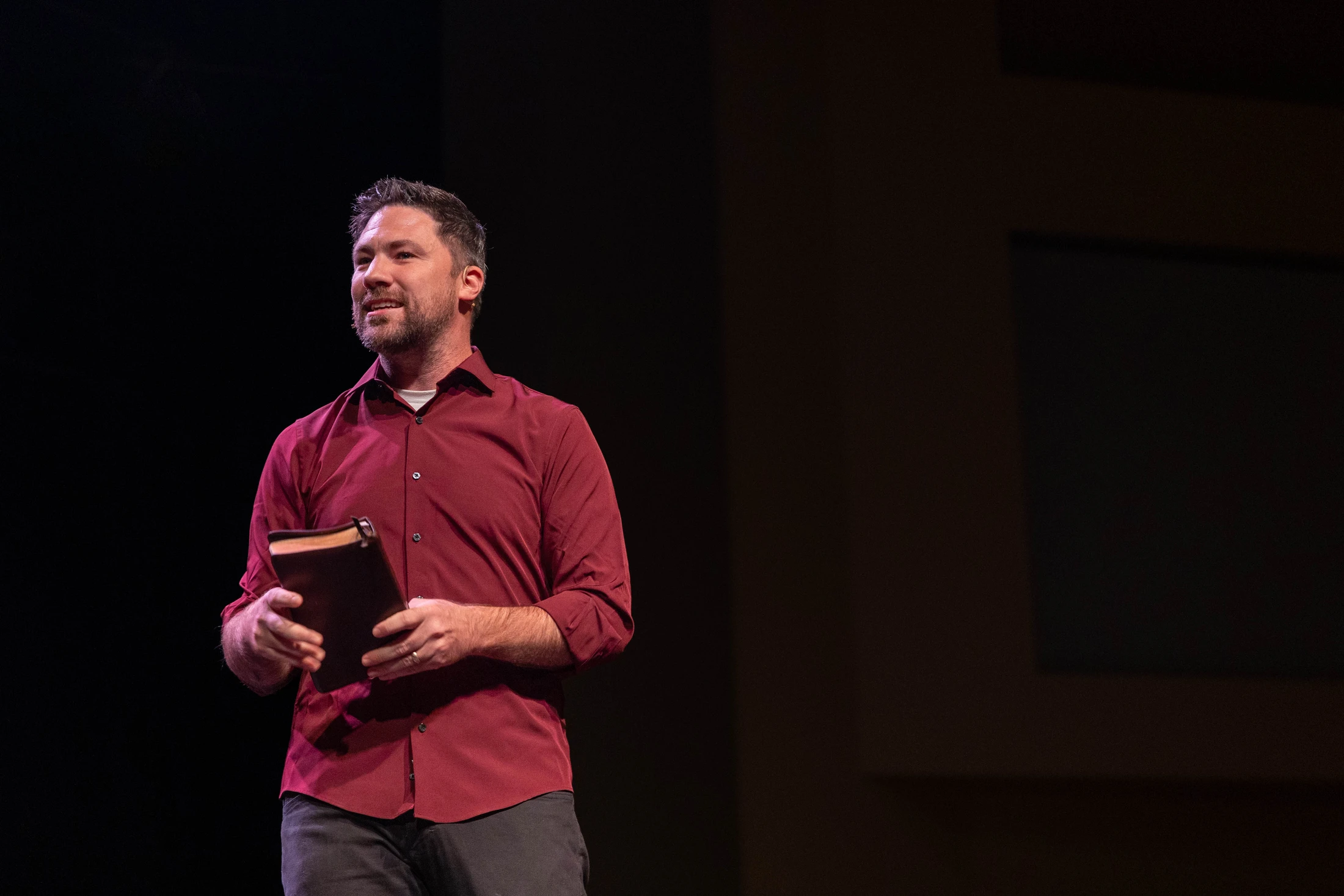
Six years ago, a virus none of us had heard of changed the entire world in a single year. Pastor Joel Hastings asks: if something that small can do that much damage, what could the risen Jesus and His gospel do in a year if we let Him move? Kicking off a new series called "Foundations," we head to Acts 19 to see how the church in Ephesus became one of the most powerful movements of the ancient world — and ask what it would take to see the same thing happen in Northwest Arkansas.
Pastor Joel walks through the story of Apollos, a gifted but incomplete preacher who needed mentorship from Priscilla and Aquila, and Paul's arrival in Ephesus, where he discovers believers who don't yet know the Holy Spirit. From there, the message moves toward a simple but convicting truth: before God moves widely in a city, He has to move deeply in us — dealing with our own sin, receiving the Spirit, and being faithful even when we never see the full impact of it.
- Knowing about God isn't the same as knowing Him — pursue a real relationship, not just information.
- You're not waiting on God to fill you with His Spirit; He's waiting on you to draw near.
- Faithfulness in small, unseen places can echo for generations — be faithful even without knowing the outcome.
Hey, my name is Joel. I'm on the pastors here, and we are going to be starting a brand new series and what it's actually going to be eventually, we're going to make our way over in October into the book of Ephesians, verse by verse.
And I think that's going to be a great series. But before we get to that point, to better understand it, we're actually going to spend a few weeks in the book of acts. And so I'm going to invite you over to acts 18 this morning, acts 18, as you make your way over there. You know, I've been here in Arkansas for about a year now, a little over a year.
And so I don't remember exactly how everything affected you. But about six years ago, there was a little thing called Covid. I don't know if you did. You have that here in Arkansas, you know, and I get like normally whenever you do an introduction to a sermon, you're like the whole introduction is trying to draw people in and make them feel comfortable.
And then I'm like, Covid and not usually the best way to start out there, but it's been in the news a little bit. So I've been thinking about it a little bit more. And let me just start out by saying the whole point of the sermon is not about Covid, so don't cancel me. I'm sure whatever your opinion about it was, it was definitely the same as my opinion.
And you're correct. All right. So let me just get past this part here. But but inevitably, the things that I think that that we can't say for certain, whatever it is, at a certain point there was like a patient zero right? At certain point I'm not going to get in a house our way or anything like that. But there was at one point like somebody got it and then another person got it, and then a lot more people started to get it.
And then within a matter of one year, a disease that probably none of us had heard about affected almost the entire world and infected most of us, really making all of our lives completely different, probably a lot harder. But it impacted the entire world in a matter of one year. Just those microscopic little germs, right? And the more that I thought about it, the more that I thought to think, man, if if a small little germ that I cannot even see or understand, if it can have that impact over the entire world in one year, I wonder what the risen Lord Jesus Christ and his gospel can do in one year as well, right?
Like like we've seen it. Like we just saw something that has completely impacted the entire world for the negative. And it was a hard season. But the only thing that is more powerful than sickness and death that I know of, that the whole world knows us, is Jesus Christ and the power of his gospel. And that's what we get a look at here today.
See, this sermon is called foundations. The series is the beginning of a move of God, because we're going to look at how this church in the city of Ephesus actually started. This church ends up being coming the first megachurch in the entire world. This church had people in it like Apollos, and Paul had people in it like Timothy as one of his first pastors.
It even had, according to church history, some records say that Mary, the mother of Jesus, ends up becoming a member of this church. And it was such a powerful move of God that whenever we look at it, we're going to see man. If it can happen in Ephesus, why can't it happen in Bentonville as well? And that's what my prayer is.
That's what my desire is, is to see God move. And it doesn't necessarily even have to be through grace point, but I want to be just a little piece of part of it. I want to see God move in this community. I want to see revival break out here at Grace point and in all the other churches. And I'm going to invite you.
I'm going to invite this church into this. As we now look, this church now is 25 years old, and I'm so thankful for pastor Mike and his wife Lois, starting this ministry 25 years ago. And now as we look at what is the future 25 years going to be like, we get to ask ourselves, what would it take to see a move of God now, from now until he comes back again?
That's what we get to see today. And so I'm going to actually invite you to stand up, and we're just going to read a portion of the passage here together before we jump into this passage. And I know I said acts 18, actually, we're going to start reading acts 19 for this part of the sermon here. Acts 19 starting in verse one.
And it happened that while Apollos was at Corinth, Paul passed through the inland country and came to Ephesus. There he found some disciples. And he said to them, did you receive the Holy Spirit when you believed? And they said, no, we have not even heard that there was a Holy Spirit. And he said, into what were you baptized?
And they said, into John's baptism. And Paul said, John baptized with the baptism of repentance, telling the people to believe, and the one who was to come after him, that is Jesus. On hearing this, they were baptized in the name of the Lord Jesus. And when Paul had laid their hands on them, the Holy Spirit came on them, and they began speaking in tongues and prophesy.
And this is the word of the Lord. You may be seated.
The city of Ephesus. You might not know a lot about it, but it was an ancient city in what is modern day Turkey and this ancient city in the modern day Turkey. It wasn't necessarily the largest city in all of the Roman Empire, but it was one of the most influential cities in the Roman Empire. Let me show you this map here.
So you get a little bit of a context, because we're going to be talking about this city if it says for a long time to come here. And so this is if you can kind of recognize the shapes there. This is in modern day Turkey. It's a few miles inland. So it's not quite right on the the coast, but it's kind of inside of a bay there.
You can actually go there. It's one of the best preserved ancient cities in all the world. So you can actually go and see many of the things that which we will be talking about, just to show you that this is all true. But this is that city of Ephesus, and it was a very much of an economic hub in the ancient world, so much so that it really punched above its weight class.
Most of a lot of economic finances and wealth flowed straight through the city of Ephesus. And so in that way, I think it is actually a lot like Northwest Arkansas as well. Might not be the biggest city, but it was one of the most influential financial cities in all of the world. And this is where God decides to set up his shop in.
Really, in a place with lots of persecution and a lot of different opposition coming the way. And yet this is where God is going to set up one of the most powerful churches of the ancient world. And so we just read through a few portions of what we're going to look at in acts 19. I want to get us caught up on a little bit of the context there, that main portion.
So let's go back up to act 18, starting in verse 24. Acts 1824 says, now a Jew named Apollos, everybody say Apollos. Paulos. He was a native of Alexandria, and he came to. Now let me stop right there, this man named Apollos, he was a native of Alexandria. That right there in and of itself was kind of a flex in the ancient world, because in the ancient world, Alexandria was kind of known at the Harvard of the day.
They had the world's biggest libraries in the entire world. And so if you were from there and you announced that you were from there, it meant that you were probably were a smart individual. It was a very prestigious thing. Like, you know, University of Arkansas. It's a prestigious school. Arkansas State is also a school. And, you know, but just came but this would be more than not even Arkansas.
This would be like, hey, I am from Harvard, I am from Oxford. This guy shows up. This was a prestigious thing. He came to the city of Ephesus and then it says he was an elegant man. He could speak very well. He was competent in the scriptures in that time. The scriptures would have denoted not the New Testament, because I was still being written, but the Old Testament.
So he knew the Old Testament well. He was a Jewish man. Apollo, so was a Greek name. So he probably knew philosophy, and he also knew the scriptures as well. He was a well-earned he could speak well. He knew the scriptures well. Verse 25, he had been instructed in the way of the Lord. So now it seems like he has also really studied, probably knew the Old Testament better than any one of us here alive today, because this would have been their entire life.
And then it says, in being fervent in the spirit, he spoke and taught accurately the things concerning Jesus. So not only could he speak well, not only was he educated, but he is a passionate man as well. He would get up and he is probably a fiery preacher, and you would just get drawn into him and be engaged with him.
And he was convincing people to follow after the way of the Lord, and he taught accurately now the things concerning Jesus. But but remember, now he's from Alexandria, and now he's in Ephesus. And so what he knows about the current happenings of the New Testament, we're not quite sure yet, because and the rest of this verse here on the next slide, it says, though he only knew the baptism of John, the baptism of John, that is John the Baptist, if you remember that story.
For those of you that know your Bible, John the Baptist was Jesus's cousin who came before Jesus, right? And before Jesus came, he was actually there and he was baptizing people. But it was called the baptism of repentance. Essentially, what it was is that they were looking forward. They were still more or less Old Testament believers looking forward and saying, we know that the Messiah is coming.
We know that he is here and he is near. But let's go ahead and be baptized to show that we are going to try to follow him more. It was a forward looking thing and that's all that Apollos new. And so there's all sorts of debate among scholars now, exactly how much Apollos new, because it does seem like he knew a certain things, and certainly he knew the Old Testament.
And if he was able to apply the Old Testament, well, he could clearly see that there might have been a messiah either coming or have come. But yet he still is lacking some information. He's lacking the full gospel that is needed there, because he doesn't quite know yet about the baptism of Jesus, and he doesn't know yet, as we're going to see the Holy Spirit Himself, so he knows part of it, but he doesn't know all of it.
And it goes on to say he began to speak boldly in the synagogue. But when Priscilla and Aquila heard him, they took him aside and explained to him the way of God more accurately. So this Jewish man from Alexandria goes inside of a synagogue, and he's teaching. He's persuading. He's probably pulling out Isaiah 53. He's probably pulling out all sorts of texts from the Old Testament, pointing and saying that there's this Messiah coming and all of this, but then there's a mature couple in there, Priscilla and Aquila.
Notice they're married couple. Priscilla is always going to be mentioned first. She probably was either the more vocal one or more spiritually mature one, but they come together as a married couple and just pull him aside and say, hey, we love what you're doing, we love what you're doing. But but can we help you for a moment? No.
As a preacher here, almost every single Sunday, I come out into the lobby and somebody tells me that I mispronounce the word. That's a normal thing. I'm from Oklahoma, and, like, I get it, but like, I'm used to this because in all, honestly, one of the things I was a huge blessing to me was whenever I went to school, I actually had to take a preaching course.
And it was it's an unusual thing. Whenever you go to seminary, you have to take a preaching course. It's called homiletics because the classroom is actually set up. It's an inside, small little classroom, but it's set up and it looks exactly like a little chapel. And so there's like stained glass, even though, you know, there's not a window there, there's this giant pulpit.
And what's the interesting thing is I had a professor named Doctor Fink who's an 80 year old kind of gruff man, but I loved him to death. But whenever we had to preach our sermons to all the other classmates and the fake little pews there, we would go up. We'd go behind a pulpit, and I had to stick an earpiece in my ear so he could talk to me.
Right. It's like practice listening to the Holy Spirit. I was actually listening to Doctor Fink, and and that was all fine and good. Only on occasion when he ever say, like, Joel, slow down, or Joel, like, wrap it up or like every so often you'd hear it, but not very often, except for one time whenever I was preaching.
And about halfway through, halfway through my sermon, he's in this back room behind a one way glass that I cannot see. I hear a phone ring in my ear, and then as I hear the phone ring in my ear, all of a sudden now I hear him say, hello, who's this? And then he's like, I have a doctor appointment when all of this is going inside my head, while I'm also trying to still preach to 50 people and I'm like, I don't know how to.
Eventually I'm like, Doctor Fink, I can hear you. And, you know, in this moment now, I've been in so many opportunities where people have had to correct me, and that's a good thing. I hope that you are taking it serious enough to actually watch and learn and try to understand it better, but notice how they do it. They come alongside this young, mature or this young immature believer but fiery preacher and he says, hey, hey, can we can we come alongside you?
They don't post about on Facebook. They don't make a big scene out of it. They simply just invite him in and do what you know what that's called? Discipleship. They just invite him into the life, share a little bit about them, help him grow, and I hope that you are doing that. This is so easy, especially for those of us that have been Christians for a long time, to look at the younger people, to look at the teenagers, to look at the young adults and look at the music and look at all of the things that we don't necessarily like anymore and just say, forget about it.
What if instead you just come around the side of them and say, man, I love how passionate you are about serving the Lord. I love to see what God is doing in your life. Can I come and can I help you? Can I show you some of the things that I learned so you don't have to make the same mistakes that I did whenever I was your age?
That's an invitation for every single one of us to be involved, to pour into the next generation as well. It goes on to say here that after he taught, after he walked with them, verse 27, and when he wished to cross over to acquire, that's in modern day Greece is what that is. The brothers encouraged him, probably Priscilla and Aquila as well, and wrote to the disciples to welcome him when he arrived.
He greatly helped those who through grace had believed, and he was powerfully refuting the Jews in public, showing by the scriptures that Christ was Jesus. Now, if more fully understands, and now his ministry is going to explode. So much so that if you know the book of Corinth is where he's going to end off in the book of Corinth, whenever Paul writes in first Corinthians three, it says that some follow me, Paul, some follow Apollos.
So essentially he's the only guy that I know of that people were actually saying, actually, I don't really like Paul that much. I would prefer to follow Apollos. That's how powerful of a testimony and powerful of a preacher this man was, all because Priscilla and Aquila and the other disciples just gather him there and start to train him up.
See, at the end of the day, he knew a lot about the Old Testament. He knew a lot about God, but yet he still didn't have the full picture. And how many people in Northwest Arkansas, how many people, maybe even in this church, in this room right now, when you say, yeah, I knew the stories, I know all the things.
I know that Jesus rose like, you know all about God, but yet you're still missing something. But yet it's not enough just to know about God. It's not enough to know about God. There has to be something more. If we want to see God move in our land, if we want to see God move in north of us, our.
If we want to see God move in this church, it's not just having an understanding, a partial understanding, because at the end of the day, the book of James says, hey, you believe in God, great, so do demons. So if you say, I believe in God, that's good enough. You're on the same path as a demon right now.
This is not really where you want to be. Instead, it's an invitation now to say, not only do I know about God, but I want to know him. I want to believe in him. I want to have a relationship. I want to become like him. And then here's where it gets a little bit interesting. In star 19, chapter 19, it says, and it happened that while Apollos was at Corinth, Paul passed through the inland country and came to Ephesus.
The irony of it right now is that right now, the start of this Paul was over in Corinth, which is in Greece, and Apollos was in Ephesus, which is in Turkey. It seems like Apollos probably took a boat and went over to Corinth, while at the same time Paul, who is in Corinth, walks across the land and goes over to Ephesus.
And so they just crisscross and doesn't seem like they ever actually met each other on those trips here. But by the time now Paul gets over to the city of Ephesus, he starts to walk around and and it seems like he meets some disciples there. He found some disciples, which was probably a welcome surprise for him, that there was somebody there that that knew a little bit more than what he was normally expecting.
But in verse two it says, and he said to them. Did you receive the Holy Spirit when you believed? And they said, no, we have not even heard that there is a Holy Spirit in this verse actually is plays out every single time a Pentecostal walks into a Baptist church. Just kidding.
Have you ever gone into a church where it's like they dress, right? They sing in the same songs, you know, they're pulling out the same Bibles or similar enough. They're reading the same stories, but you're like, there's something not right about this. There's something a little bit different here. I can't quite put my finger on it, but but it seems like that's kind of where Paul was in this moment.
He's like. And so he asked that question, did you receive the Holy Spirit when you first believed? And honestly, that's a good question for all of us as well. Do you have the Holy Spirit? Because some of us are going to say, I didn't know what the Holy Spirit is, and that's probably a good invitation for you to have a conversation with one of us here on staff or one of the elders, because we would love to explain that to you.
But in reality, he could understand that there was something missing. Now, there's all sorts of theories about what was going on here. A lot of people, some people are going to say that these guys maybe weren't even believers, but yet they were just disciples of like John the Baptist and eventually Apollos. And and there's other people that are saying, no, they probably are some type of believers, but but it's a little bit confusing.
But probably what has happened here is that these guys probably heard Apollos preaching and probably knew from the next few verses here that that there is going to be somebody that's coming, but they didn't have yet the full understanding of the gospel. They did not understand what was happening in acts chapter two in Jerusalem, when the Holy Spirit came down, and that they actually get to have God's presence inside of them.
And so I'd probably say myself, and this is maybe even a minority view, but they were probably what I'd consider more like Old Testament believers there. They were believing in the Messiah, but they weren't quite sure whether, I don't know if they knew who Jesus was or if they they were still trying to figure that. But like, but they were still looking for they didn't have the full gospel that we should have as the New Testament.
They didn't know Jesus because they didn't know the Holy Spirit. At the end of the day, because you can't truly be a good Christian if you don't have the Holy Spirit living inside of you. See if you want to, if you want God to move, if you want God to move in the entire world in Northwest Arkansas, we first need to make sure we encounter God ourselves.
God, I listen, I've been here a year now, so maybe that means that I've earned enough, right? Just to say a couple uncomfortable things here. You know, as a pastor, almost every single week or almost every month or whatever, like I'll get requests and people come up to being like, pastor, you need to talk more about politics.
You need to talk more about trans stuff. You need to talk more about all this. And I get that. And I'm not scared to talk what the Bible is clear about it. I want to be clear about it. And we're going to talk about all the uncomfortable things eventually and all that. At the same time. I also know it's easier sometimes to talk about that stuff and not confront that.
Probably three out of four of the men in here looked at pornography in the last couple of weeks, because sometimes it's easier to talk about other people's sin because it gets the focus off your own sin. And as a pastor, I want to make sure before we ever see more work of God, move out there. I want to see God work inside my own heart.
I want to see him transform something. I want to see the gossip go away. I want to see this land. I want to see all the things that maybe we kind of look the other way and say it's not as big of a deal as other people, saying, look at all those sins out and look at all those sins, all the other places.
But maybe, just maybe, I first need to look at my own sin and make sure that I've encountered God, make sure that the Holy Spirit is actually living inside of me. Because whenever that happens, then now I have this invitation to go out and be the light that God has called me to be. And so for all of us now, here's this invitation.
Do you know God? Is he living inside it? Can you see that he has radically transformed your life as well? Told you how to make it uncomfortable? Keep going. Here in verse three it says, and what into what were you baptized? And they said into John's baptism. And Paul said, John baptized with baptism of repentance, telling the people to believe in the one who was to come after him.
That is Jesus. On hearing this, they were baptized in the name of the Lord Jesus. And so he's like, who are you baptized into, John? Well, John was the one who had looked forward, but now you need to be baptized again. So he apparently after that moment he grabbed them. He baptizes them in the water again there, this time in the name of the Lord.
And then after that he says, Paul laid his hands on them. The Holy Spirit came upon them, and they began speaking in tongues and prophesying. There were about 12 men in all. And if you were tracking to the entire book of acts, what you would find is at the very start of acts it says that the Holy Spirit will come upon you in Jerusalem, Judea.
That happened in acts chapter two, in Samaria, that happened in acts chapter eight. Now it's in the uttermost parts of the world that's now happening right now, that the gospel is going forth to the entire world, and it's showing that the Holy Spirit has come on, that he is ready to do a powerful work in their community. Why?
Because the Holy Spirit is now resting on them. Now for us, we look at this and we say, all right, so how do I get this Holy Spirit? See, I think in this moment for for them, this was a this was a situation that it was a transitional time period. The gospel was going forth and we had discipleship opportunities if you wanted.
But the gospel is going out forth here, and it was this invitation now for them to finally receive the spirit. And it was showing that the spirit was going forth. If you want to receive the Holy Spirit, here's how you do it. You believe in Jesus. You believe in Jesus. I don't believe that there's actually any second class citizen here.
There's certainly moments whenever the Holy Spirit might come and do a powerful work in you and a conversation or in an action or things like that, but the moment that you believe, because this is the last time in all acts are and all the epistles that there's ever going to be this what's called like a second blessing in some denominations, this is the last time.
So essentially now what we find is whenever you believe in Jesus Christ, you are baptized into the Holy Spirit. You have access to him. You don't have to ask any more. You don't have to beg him to be a part of your life. In fact, here's what I often find for us now. I'm not just super thirsty. Some of you been wondering why is this here this entire time?
And now you can focus. All right. Because let me let me put this up here. Oftentimes here's what we often say, man, I want I want God in my life. I want the Holy Spirit in my life. Why can't he just finally give me a little bit? Why can't he just fill my cup a little bit more? And we're like, begging God and begging God, and we're just hoping and we're hoping and we're hoping.
But at the end of the day, we feel very dry, don't we? Because it's like, man, God, I know that you're there. I know that you're powerful. I know that you can move. And like, maybe if I pray, I pray, I pray, then I can have a little bit extra.
You know what the beautiful thing about our God is? Is that he's not the one holding the lever back. You are. If it's up to God, he would say, I have more grace and more love and more of my spirit, and I'm not going to hold it back. I want to give it. I want to overflow this cup.
Listen, you're as close to God as you want to be. He's not the one holding you back. You are. And you have an opportunity now to be filled. And how do we be filled? We believe in him, and we do all those things that we talked about this summer, of following after him every single day to say, God, I want to be filled by you.
And he has more than enough. We could overflow this stage. Right now, God has more than enough of everything you need, and he's just waiting for you just to draw close enough to be filled by him. And it says now, as the last few verses, and then we'll be wrapping up.
In verse eight, it says, and he entered the synagogue, and for three months spoke boldly. This is Paul now reasoning and persuading them about the kingdom of God. But when some became stubborn and continued, and unbelief speaking evil of the way, there was a name for Christianity in the first century before the congregation, he withdrew from them and took the disciples with him.
Reasoning daily in the hall of Tyrannus. And so now Paul is trying to convince all the Jewish people for and he goes in there every single day. But after a little while they come back and he says, and in the previous verses there, that they were stubborn and they continued in their unbelief, even started speak evil there. And the Lord just continues to shut this door and shut this door and shut this door.
And that probably was very aggravating for Paul and somebody who preaches all the time. There's somebody that that tries to share their faith. It's aggravated, it's annoying. It's frustrating when it's like, man, God, I'm trying to preach the gospel. I'm trying to share the gospel. But the door, Keith being shut, and that's what's happening here. And so what did Paul do after the door was shut?
He left that synagogue. He walked over pretty much next door to another hall of Tyrannus, which was a philosophical lecture hall of that day in Ephesus. And he's like, hey, do you got a few hours? And essentially in the afternoon, likely he went over there and he started to lecture, and he started lecture, and he started a lecture and more and more people now, not Jewish people this time, but the Gentile people, which this city was filled with.
Gentile believers started to come in and they started to hear about Paul. And because this first door was closed, this other door became open. And now every single day he's going to this hall, Tyrannus. And in verse ten it says, they continued for two years, every single day for two years. And get this, so that all the residents of Asia heard the word of the Lord, both Jews and Greek, all the residents of Asia.
This would be modern day Turkey, but nevertheless, that's pretty impressive. Every single day he'd go in, he'd lecture, he'd he'd dialog, he'd share his faith. And after two years, all the residents of all of Turkey hear about the gospel of Jesus Christ. Did you know that we still serve that same God? Did you know that he is still that powerful?
Did you know that revival is still possible even in America, even in the year 2026? That same God that did all of that, that caused one man to go into a city and start to share his faith, cause all these disciples now to go out and start sharing their faith. So much so that all the residents of Northwest Arkansas can know about the gospel.
All the residents of America can know about the gospel. I believe all the residents of this world can know about the gospel. But before we get to that point, he needs to start moving deeply inside of us before God widely moves. He deeply moves in his people. And how does he deeply move? He it's people that's devoted to his Holy Spirit.
What does that look like? It's people that are devoted to boldly proclaiming the Word of God. It's people that's devoted to saying, I'm going to first deal with my own stuff. I'm going to be passionate about following him with every ounce of my being, so that I can be a light to the world around me. Let me finish off with this door, and then I'm done.
Back in the 1800s, probably 1840s or so, there was a man named Edward Kimball. You no doubt probably you have not heard of this man, but he was a he wanted to be a pastor in the Boston area in the 1800s. And essentially, though he had all sorts of sicknesses and it prevented him from pursuing the ministry. And eventually, though, he did become a school teacher, and that was his career, and he still wanted to serve the Lord.
And so he became a Sunday school teacher. But apparently he didn't even get to be a Sunday school teacher. The adults they put him, actually a Sunday school teacher of the teenage boys, which now sometimes isn't considered the A-Team. Right. But but nevertheless, there he took that very serious of teenage boys. In every single Sunday he would prepare.
He'd try to teach him a lesson. He noticed one time there was a young man that came in, and that man, that young man didn't know anything about the Bible so much. So when he said, turn to the Gospel of John, the young man couldn't find it in some of the other boys started to snicker at him, and yet he came over.
He opened up his Bible, opened it up and gave it to him and allowed him to read it. And then this young man who who came there didn't know anything, was just so impressed by the kindness of Edward Kimball that after a little while, Edward Kimball said, you know what? I don't think this young man is a believer.
And so every single day, Edward, after he got done with his work, would go to this young man's job. Back in the 1800, all the teenage boys had jobs and were working long hours. And this young man actually would stack shoes every single day in a shoe shop. And so he would go and he would actually help this young man stack his shoes and train up and disciple this young man.
For over a year he met with him until that young man believed. And eventually that young man grew up to whom we know as D.L. Moody. Now, if you know Christian history in America, then this name is going to sound a little bit more familiar, because he's the man that started the Moody Bible Institute, which ended up sending out literally thousands and thousands of missionaries.
It is also there's a church named after him in Chicago, a giant megachurch, the Moody Church here. This man, Moody, had literally impacted hundreds of thousands, if not millions of people for the gospel. Because of him and his ministry. He would go around all throughout America in the 1800s and even over in Europe and preach the gospel and start revival, all because Edward Kimball decided to share his faith, decided to take every single day and go down and disciple a young teenager that nobody else thought had potential.
But the story doesn't stop there because Dale Moody, he impacted so many people. One of the giants of the faith of the last century, one of those guys that ended up being impacted by him, discipled under him was another evangelist named Jay Wilbur Chapman. And he would go around and he would preach all sorts of tent revivals as well, and he would preach.
And there was lots of people that got saved under him, including. There was one time when he was preaching, there was a professional baseball player that played with many of the teams that we actually even know. To this day, a professional baseball player walks in. A known person that was not near to God, live far away from God.
But eventually this baseball player walks in. Here's the gospel for the first time, decides to get saved. And his name was Billy Sunday, another very famous evangelist, Billy Sunday, actually is the one who perfected the idea of revival, perfected the idea of a tent revival, and he would go around and he would preach hard about the gospel of Jesus Christ and leading many, many people to the Lord, including another young man at that time, they, Mordecai Ham.
This young man named Mordecai Ham ends up growing up to also become another evangelist. And he would go around and these men, some of them you probably haven't even heard of, or you don't know the name of. But yet Mordecai Ham one day goes to Charlotte. He preaches the gospel as he is preaching the gospel. This entire 10th of a thousand people is filled.
There's two young men on the outside that just want to see what's going on, have no desire to get saved, no desire to believe the gospel, but they just see something happening. They walk inside and one of those young men comes back the next night, in the next night and the next night until he gets saved. And that young man ends up being Billy Graham.
Now, I know that even some of our teenagers don't even recognize this face, but Billy Graham ends up preaching to over 2 billion people the gospel of Jesus Christ.
Little did Edward Kimball know, not just D.L. Moody. He saw a little bit of Moody's influence, but little did he know about all the other men that would follow after him, all the other women that would follow, after all the other people, all the other parents, all the other influence because of his act of faithfulness that would lead one Sunday school teacher to take every single day to disciple one young man to literally billions hearing about the gospel.
Because of that, let me take it one step further. If you're here today, maybe, maybe Billy Graham is actually part of your story. Or maybe, maybe you got saved at watching one of his crusades, or maybe one of your parents did, or your pastor, or your Sunday school teacher, somebody that had a spiritual influence. If you know of somebody that was like a spiritual influence on your life, I bet we have some, even in this congregation right now that you say, yeah, Billy Graham, actually, his ministry impacted me.
Mine is impacted by Billy Graham and his ministry, if that's you as well. Raise your hand right now. I want to see how many we got. We got several dozen people in this congregation right now. Put your hands down that have had an impact on their life. Because Edward Kimball devoted himself to training up one person.
What can God do with you? What can God do with you? What can he do in your ministry over there? And our kids? What can he do in your ministry, at your workplace, where you spend years and years and years and years and you don't ever know? He's never going to see those crowds. He's on this side of heaven.
He died not knowing the full impact of his faithfulness. Some of us will die never knowing, but I want to be the one that was saying I was faithful. And maybe in a 10,000 years, God is going to use that faithfulness. And if that's what it takes, so be it, because that's how we see a move of God.
Are you ready to be moved by God? Are you ready? Let's just take a few minutes, because my last point was before we can see God move widely, he needs to move deeply inside of us, that we need to take our sins seriously, and we need to be proclaiming his name boldly. Let's take a moment and say, Lord, where would you like to use me?
Every head bowed, every eye clothed. Take a moment. If you are here today and you have never put your faith and trust in him, let me invite you to do that. Don't leave. Don't leave today without first figuring that out.
For all of us, that our Christians. God can use you when we surrender to him. Father, I pray that we would be people that surrender to you every single day, that we would be people.
That are faithful above all else, knowing that you're the one that brings the harvest. You're the one that brings the fruit. Lord, we want to see you move in this church. We want to see move across this land. But Lord, please move inside our hearts first. That when we see you.
That we love you.
Lord, I pray that I'd be the father. That you want me to be. The husband that you want me to be.
Pastor the employee.
I pray that you would use me even if the world never sees anything that I do. I know that you do.
And that's enough. Lord, please move deeply in every single one of us today. Just take a moment before we wrap up.